Achievements
Certifications,
courses, and more
A live record of certifications, courses, training, and awards — pulled directly from the source of truth.
218
Achievements
3
Categories
269h 8m
Total Time
CourseIntermediateCompleted
AWS Well-Architected Foundations
Foundational walkthrough of the AWS Well-Architected Framework and its six pillars: operational excellence, security, reliability, performance efficiency, cost optimization, and sustainability. Introduces the Well-Architected Tool and review process.
AWS
CourseIntermediateCompleted
Building Intelligent Photo Search with AWS AI Services
Hands-on project that builds an intelligent photo search application using AWS AI services such as Amazon Rekognition, Amazon OpenSearch Service, and serverless components for indexing and querying images by content.
AWS
CourseFundamentalCompleted
Compute Pre-assessment
Pre-assessment that gauges baseline knowledge of AWS compute services. Used to validate readiness and identify gaps before deeper compute training, covering EC2, containers, serverless, and related topics.
AWS
Exam PrepFundamentalCompleted
Exam Prep Plan Overview: AWS Certified AI Practitioner (AIF-C01 - English)
Overview of the AWS Certified AI Practitioner (AIF-C01) exam prep learning plan, outlining the four exam domains, study resources, and recommended sequence of courses, labs, and practice assessments.
AWS
CourseFundamentalCompleted
Introduction to AWS Auto Scaling
Introduction to AWS Auto Scaling, the unified service for scaling EC2, ECS, DynamoDB, Aurora, and other resources. Covers scaling plans, target tracking, and how Auto Scaling differs from EC2 Auto Scaling.
AWS
CourseIntermediateCompleted
Advanced Tool Use Integration with Amazon Bedrock Models
This training is meant for data engineers and GenAI application developers who want to integrate tools while using Amazon Bedrock (Bedrock) Foundation Models (FM). Upon completing this training, you will understand the concepts of tool integration, the framework used by Bedrock, and best practices for integrating tools with Bedrock.
AWS
CourseFundamentalCompleted
Amazon Bedrock AgentCore Gateway Tutorial
Hands-on tutorial covering Amazon Bedrock AgentCore Gateway, which converts existing APIs and tools into agent-ready capabilities. Walks through configuring inbound and outbound auth, exposing tools to agents, and managing tool catalogs.
AWS
CourseFundamentalCompleted
Amazon Bedrock AgentCore Getting Started
Introduction to Amazon Bedrock AgentCore, AWS's platform for deploying and operating AI agents at scale. Covers the runtime, gateway, memory, identity, observability, and tools components, and how they work with frameworks such as LangGraph, CrewAI, and Strands.
AWS
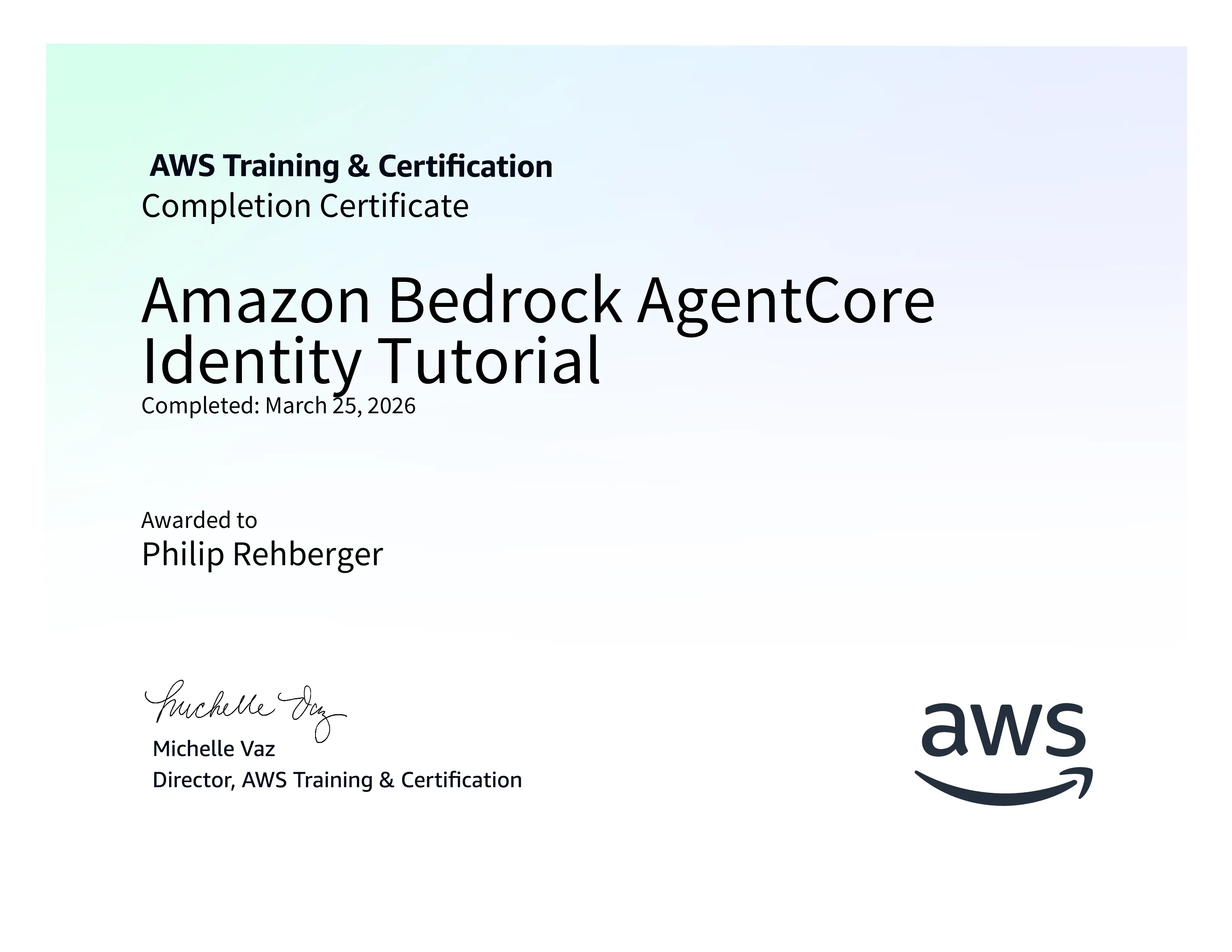
CourseIntermediateCompleted
Amazon Bedrock AgentCore Identity Tutorial
Tutorial on Amazon Bedrock AgentCore Identity, which handles agent authentication and access management. Covers integration with existing identity providers, OAuth-based delegation, and securely scoping agent permissions to downstream services.
AWS
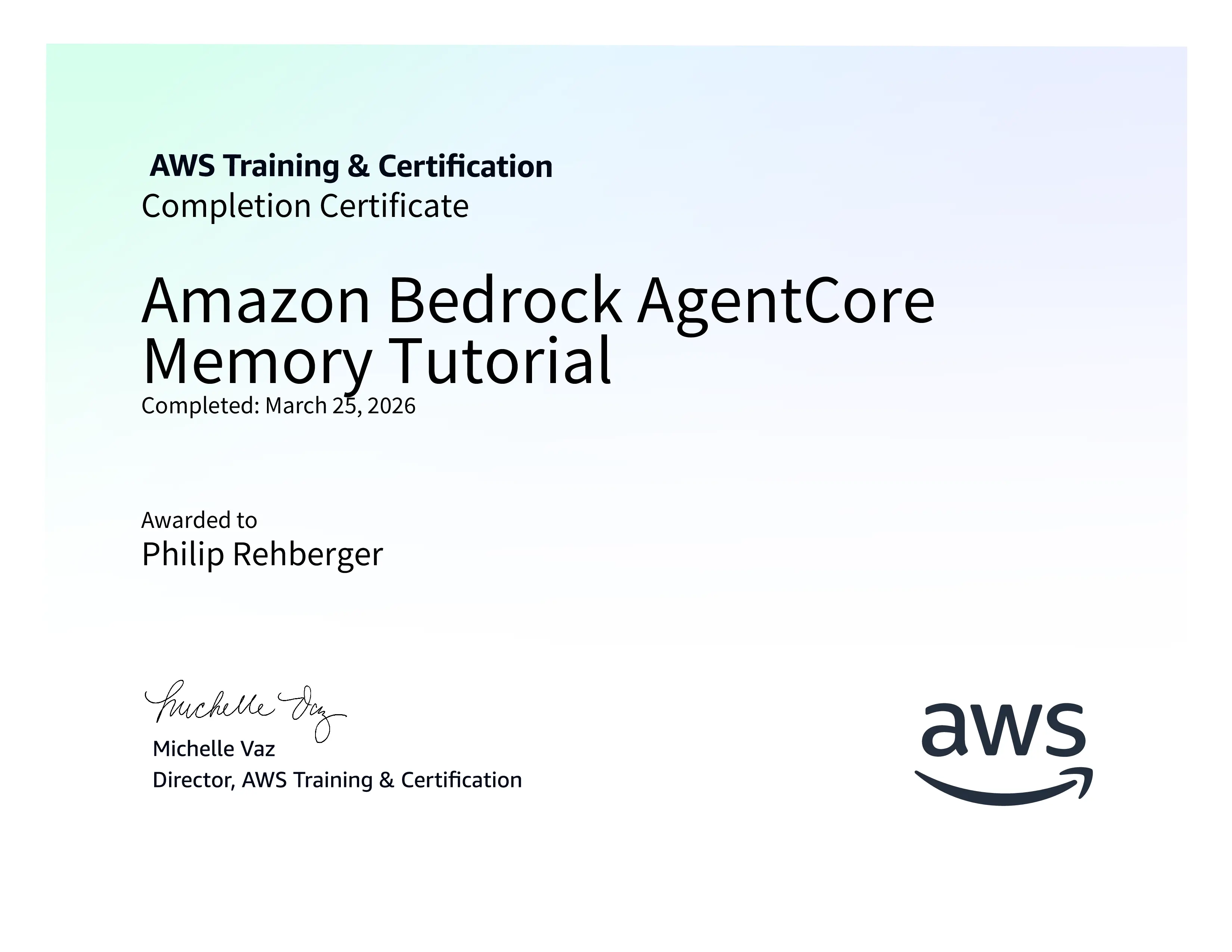
CourseIntermediateCompleted
Amazon Bedrock AgentCore Memory Tutorial
Tutorial on Amazon Bedrock AgentCore Memory, the managed service for persistent agent context. Covers short-term and long-term memory stores, summarization strategies, and how to maintain personalized state across multi-turn agent interactions.
AWS
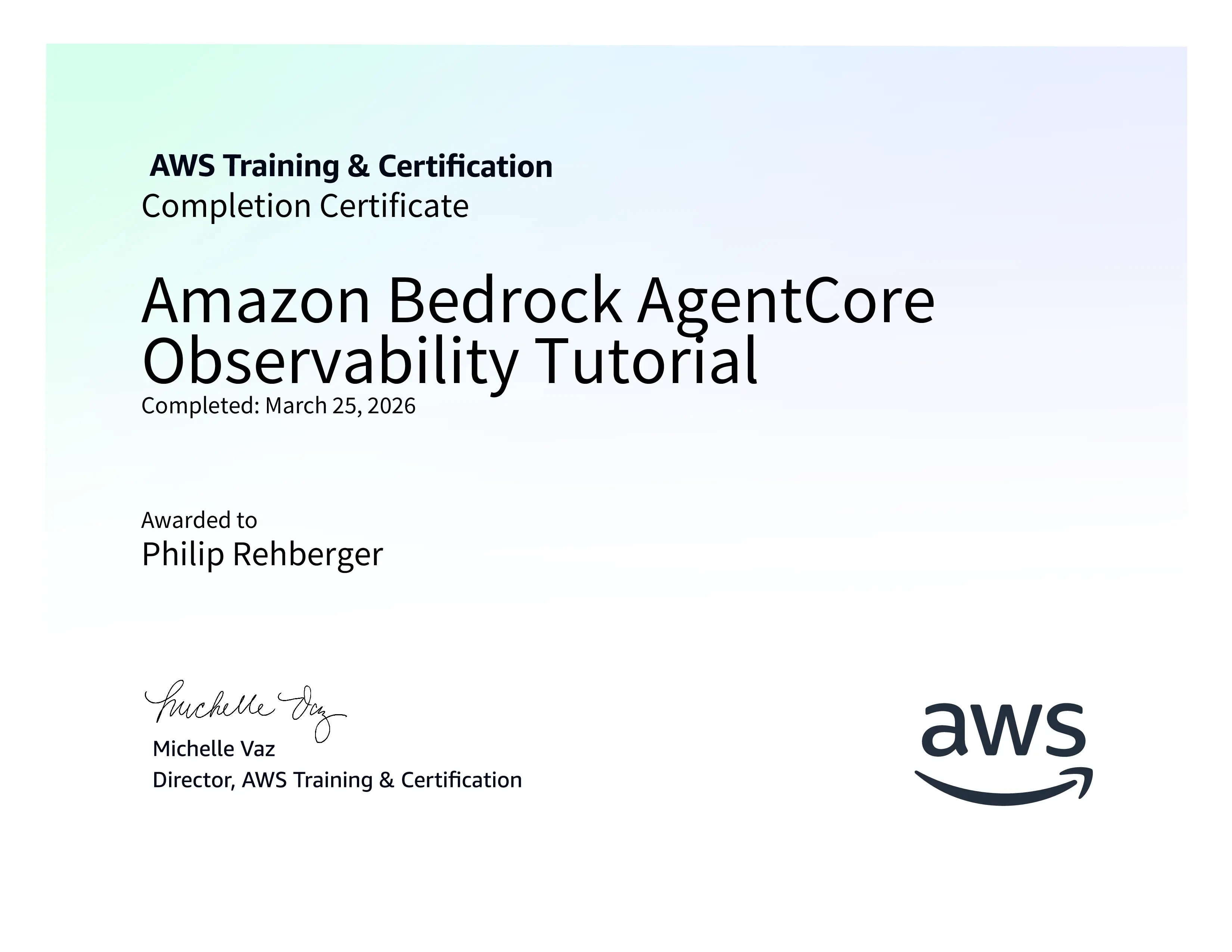
CourseIntermediateCompleted
Amazon Bedrock AgentCore Observability Tutorial
Tutorial on Amazon Bedrock AgentCore Observability, which provides built-in metrics, traces, and logs for AI agents. Covers monitoring runtime, gateway, memory, and identity components and integrating telemetry with CloudWatch and OpenTelemetry-compatible backends.
AWS
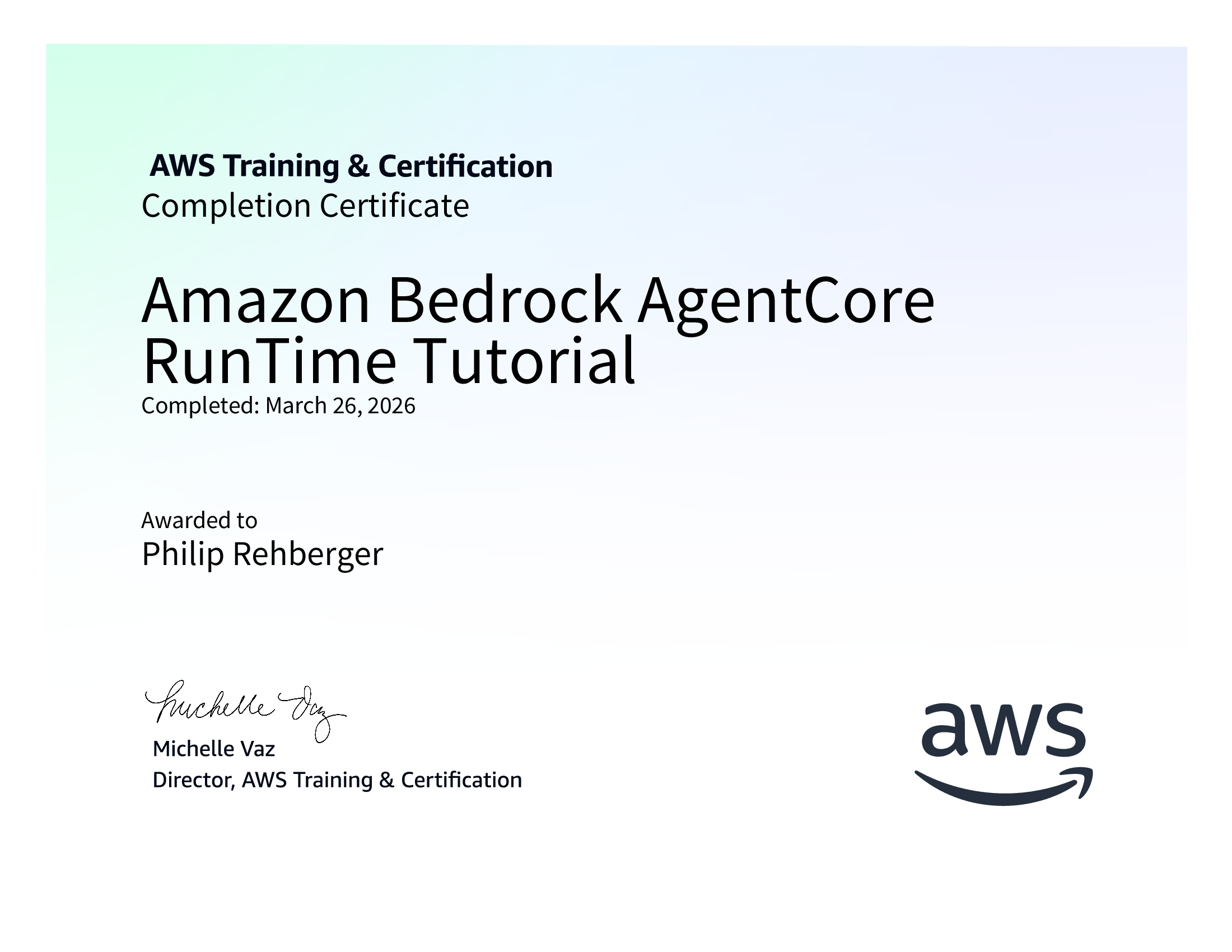
CourseIntermediateCompleted
Amazon Bedrock AgentCore RunTime Tutorial
Tutorial on the Amazon Bedrock AgentCore Runtime, a secure serverless environment for hosting agents. Covers deploying agents, isolating sessions, and using built-in primitives such as the secure browser and code interpreter.
AWS
CourseIntermediateCompleted
Amazon Bedrock AgentCore Tools Tutorial
Tutorial covering AgentCore's built-in tools, including the secure browser runtime and code interpreter. Walks through how agents use these tools to execute web workflows, run code, and produce visualizations safely at scale.
AWS
CourseFundamentalCompleted
Amazon Bedrock Business Value and ROI Assessment
Framework for evaluating the business value and return on investment of Amazon Bedrock projects. Covers value driver identification, cost modeling for foundation model usage, and methods for quantifying productivity and revenue impact of generative AI.
AWS
CourseFundamentalCompleted
Amazon Bedrock Getting Started
Introduction to Amazon Bedrock, AWS's fully managed service for foundation models. Covers available model providers, the playground, key APIs for inference and customization, and core concepts like Knowledge Bases, Agents, and Guardrails.
AWS
CourseFundamentalCompleted
Amazon Q Developer Command Line Interface (CLI)
In this course, You'll discover how this AI-powered coding assistant integrates directly into your terminal, helping you code, debug, and interact with AWS services more efficiently. By the end of this course, you'll be equipped to leverage Amazon Q Developer CLI to accelerate your development workflow and boost your productivity. Course Objectives In this course, you'll learn about Amazon Q Developer CLI features, capabilities and benefits. Target audience This course is aimed at: Customers and Amazonians Requisites With this being a 100 level offering, there are no requisites Course Outline Module 0: Amazon Q Developer Command Line Interface (CLI) Module 1: Your AI agent in the terminal Module 2: Amazon Q Developer CLI in action Knowledge Check Conclusion
AWS
CourseIntermediateCompleted
Automate Generative AI workflows using Amazon Bedrock Flows
Demonstrates building automated generative AI workflows with Amazon Bedrock Flows, the visual builder for orchestrating prompts, models, knowledge bases, agents, and Lambda functions into multi-step applications.
AWS
CourseAdvancedCompleted
Automate the creation of handout notes using Amazon Bedrock Data Automation
Hands-on walkthrough of using Amazon Bedrock Data Automation to extract structured insights from unstructured content and automatically generate handout notes from documents, audio, and video.
AWS
CourseFundamentalCompleted
AWS for SAP - Generative AI Fundamentals
Foundational course on applying generative AI to SAP workloads running on AWS. Covers integration patterns with Amazon Bedrock, common SAP use cases such as document processing and analytics, and reference architectures.
AWS
CourseFundamentalCompleted
AWS SimuLearn: Explore the Amazon Bedrock Playgrounds
Simulation-based lab where learners interact with a virtual customer to explore the Amazon Bedrock playgrounds. Provides hands-on experience choosing foundation models and crafting prompts for chat, text, and image use cases.
AWS
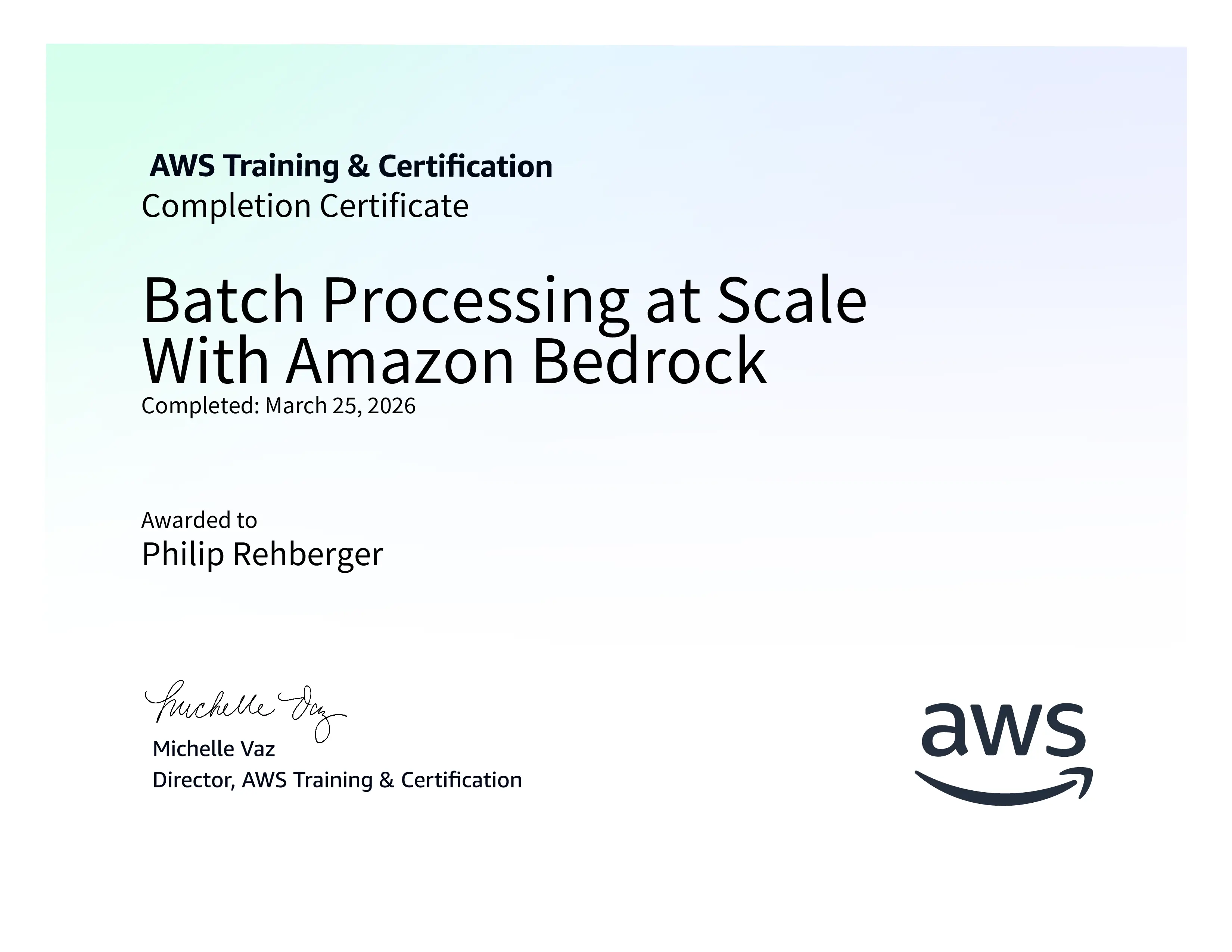
CourseIntermediateCompleted
Batch Processing at Scale With Amazon Bedrock
Covers running large-scale batch inference jobs on Amazon Bedrock, including job submission, input and output formats in S3, cost considerations, and patterns for processing high-volume document and content workloads.
AWS
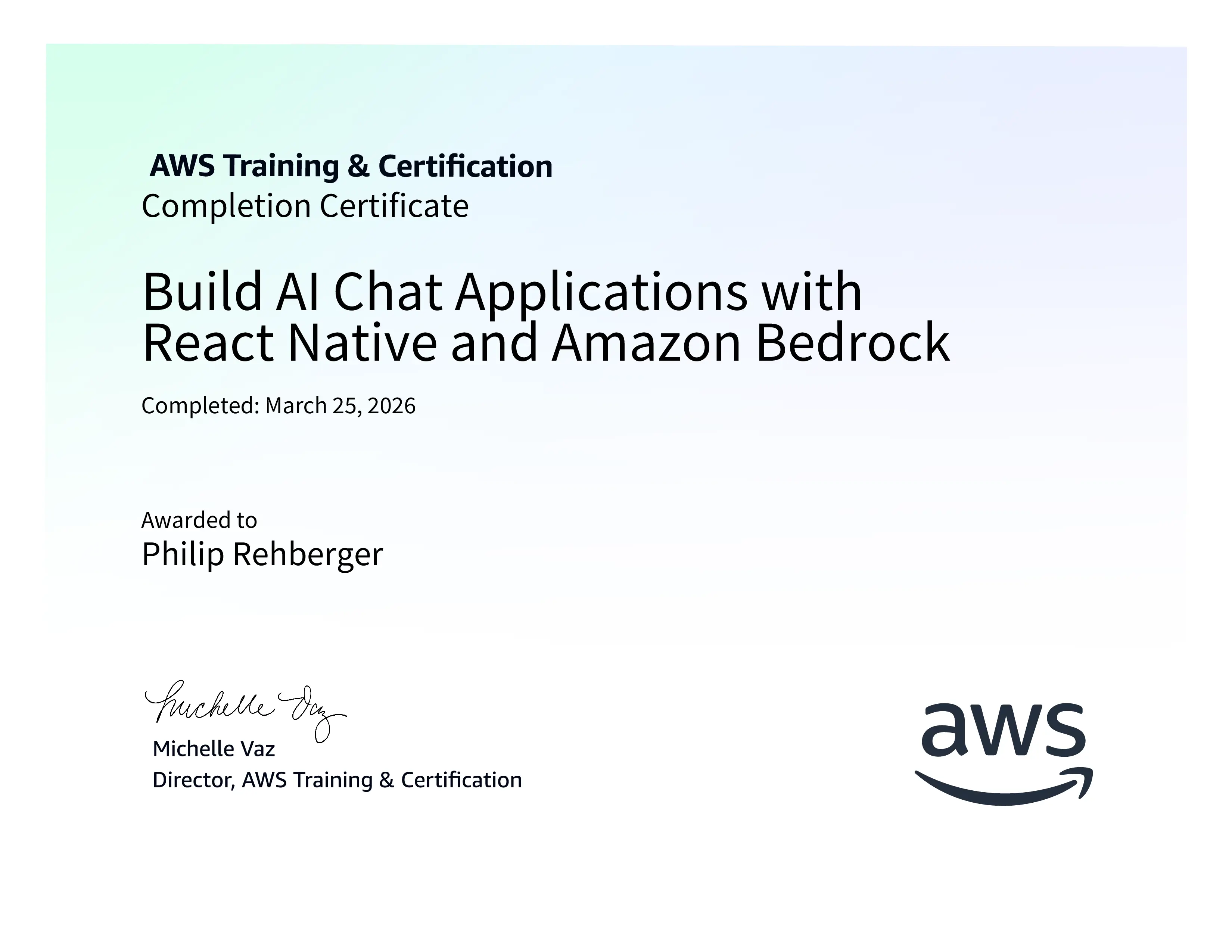
CourseFundamentalCompleted
Build AI Chat Applications with React Native and Amazon Bedrock
Hands-on guide to building cross-platform mobile chat experiences using React Native and Amazon Bedrock. Covers client-server design, secure invocation of foundation models, and streaming responses to mobile UIs.
AWS
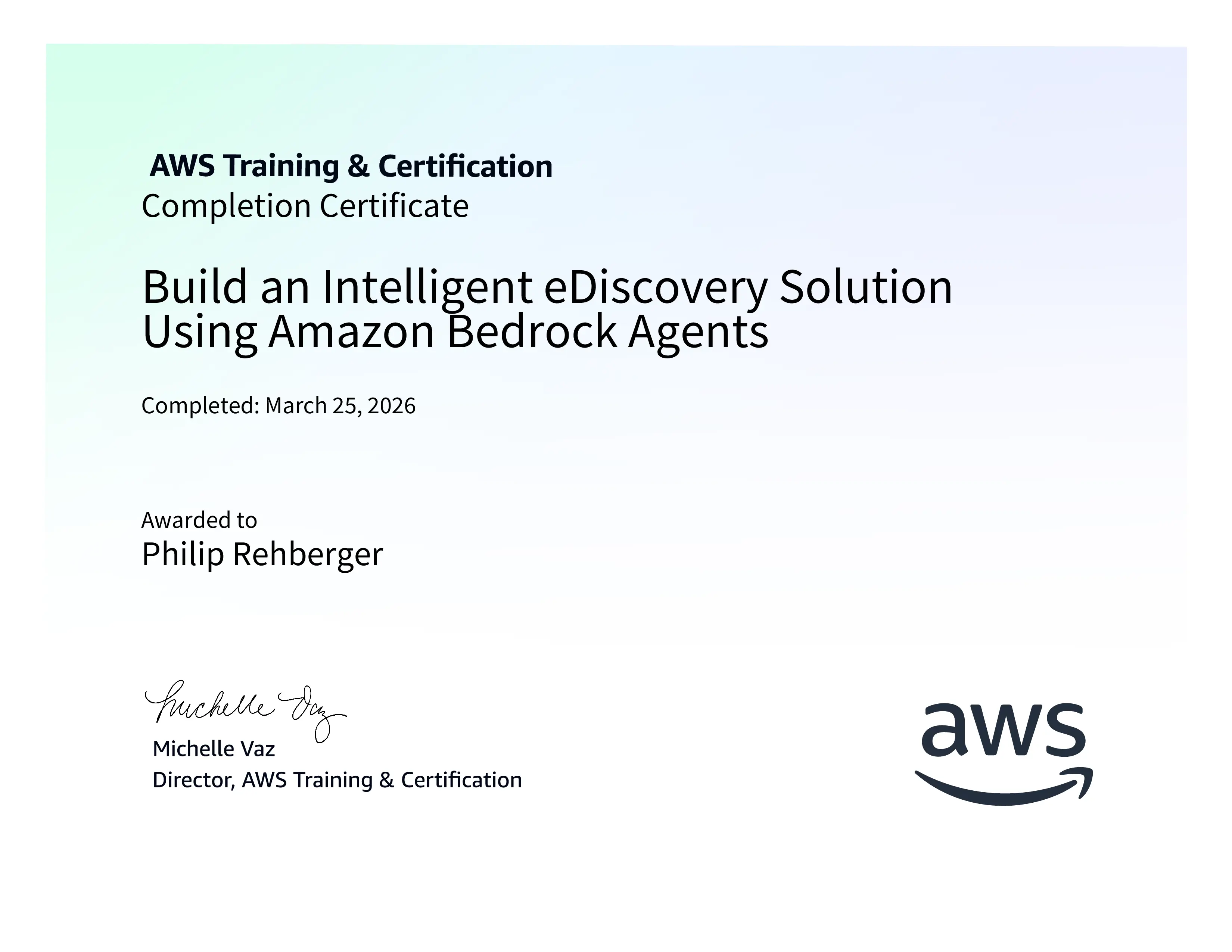
CourseAdvancedCompleted
Build an Intelligent eDiscovery Solution Using Amazon Bedrock Agents
Reference solution for building an intelligent eDiscovery system with Amazon Bedrock Agents. Covers document ingestion, retrieval-augmented generation over legal corpora, and agent orchestration for review workflows.
AWS
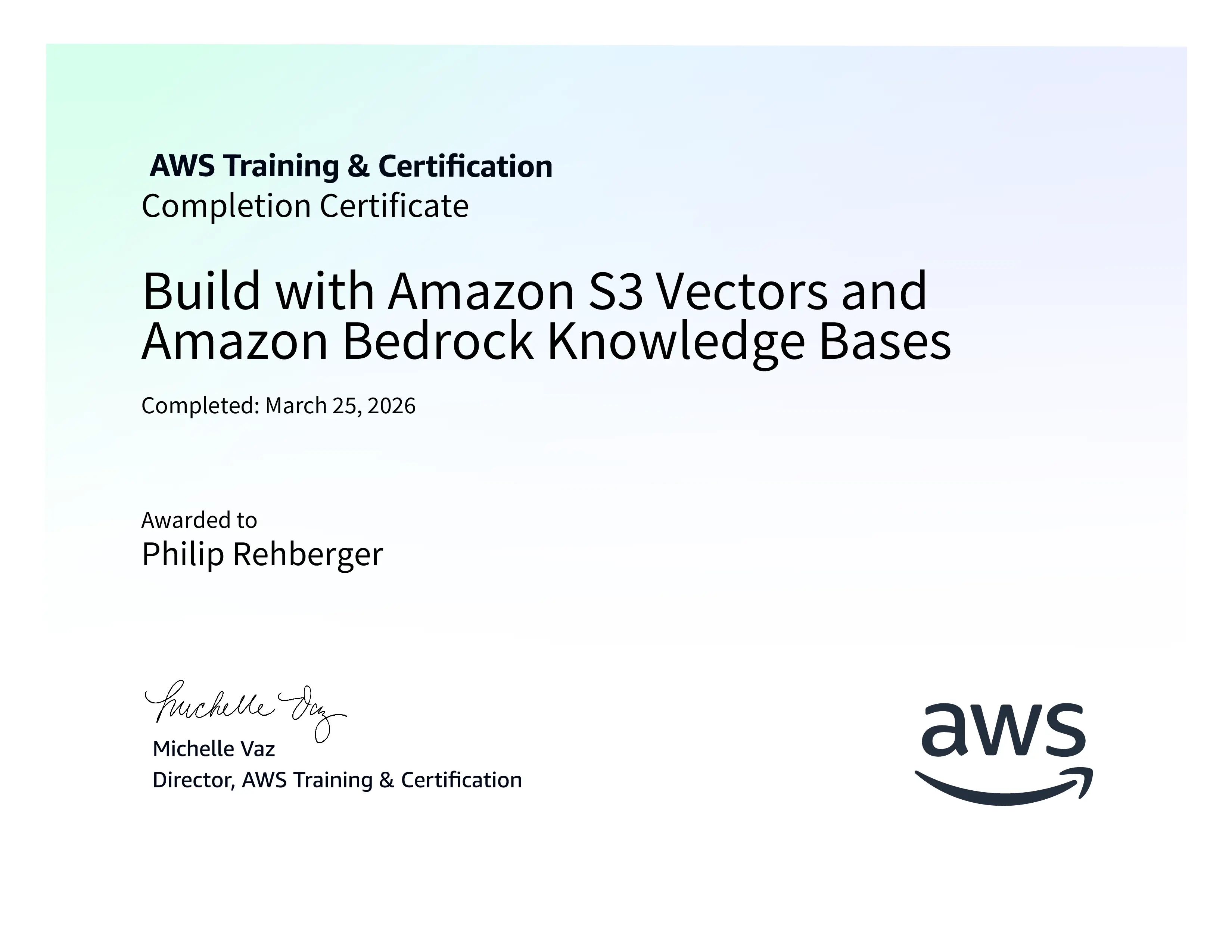
CourseIntermediateCompleted
Build with Amazon S3 Vectors and Amazon Bedrock Knowledge Bases
Hands-on lab using Amazon S3 Vectors as a vector store with Amazon Bedrock Knowledge Bases. Covers indexing embeddings in S3, configuring knowledge bases, and querying for retrieval-augmented generation use cases.
AWS
Want to work together?
I'm always learning and applying new skills — let's talk about how I can help on your next project.
Get in Touch